


If you’ve started shopping for countertops, you’ve probably noticed that pricing can feel inconsistent. One store is quoted by the slab, another by the square foot, and sometimes the numbers don’t seem to line up.
The truth is, countertop pricing depends on several factors, and understanding how slabs are priced can help you make a more informed decision before your project begins.
Let’s break down what homeowners should expect when it comes to slab pricing.
What Does “Slab Pricing” Mean?
When materials like granite, quartzite, marble, or some quartz products are sold “by the slab,” it means the project is priced based on the number of slabs required to complete the job, rather than strictly by square footage.
A typical stone slab is roughly 120” x 60” (or larger), and depending on your layout, your project may require one slab, two slabs, or more.
Selling by the slab allows homeowners to:
- Select their exact slab(s)
- Choose materials with unique movement or veining
- Prioritize layout and pattern flow over material efficiency
This is especially important for homeowners who want:
- Dramatic veining alignment
- Bookmatched slabs
- Specific sections of a slab featured in their kitchen
However, slab pricing does not necessarily mean the homeowner takes possession or ownership of the remaining slab material.
In many cases, slab pricing can be more expensive than square foot pricing because the material is reserved specifically for that project, even if every portion of the slab is not used.
In the countertop industry, the majority of suppliers and colors are priced by the slab. This means that even smaller kitchens may still require purchasing a full slab.
Why Two Kitchens of the Same Size Can Have Different Prices
Even if two kitchens measure the same square footage, their slab pricing can vary based on layout.
Several factors affect how efficiently a slab can be used, including:
- Island size
- Peninsulas
- Sink and cooktop cutouts
- Seam placement
- Material pattern direction
Some layouts allow multiple sections to be cut from one slab, while others require a second slab simply because of the way the pieces must be arranged.
This is one of the reasons countertop quotes can vary even when kitchens appear small.
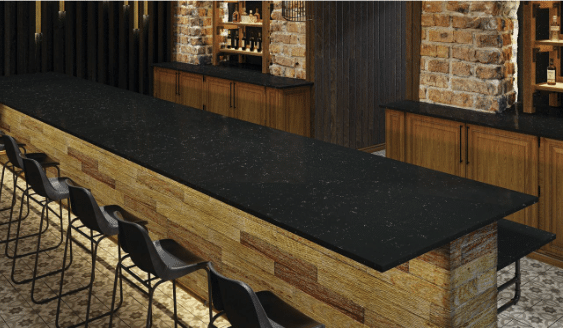
countertop slab pricing
The Role of Veining and Pattern Layout
With materials that have strong movement or dramatic veining, fabricators must carefully position pieces to ensure the pattern flows properly across the countertops.
Sometimes this means sections cannot be rotated or flipped during fabrication, which can require additional slab material.
This careful planning helps achieve the final look homeowners expect, but it can also affect how much material is required.
Some homeowners intentionally prioritize visual flow over material efficiency, sometimes referred to as “cutting from the middle of the cake,” to achieve the exact look they want.
Do Homeowners Keep the Leftover Material?
One common misconception is that purchasing countertops “by the slab” means homeowners automatically take ownership of any leftover material.
In reality, slab pricing refers to how the project is priced, not necessarily ownership of the remaining slab material.
Because remnants may still be needed for:
- Future adjustments
- Possible remakes
- Seam matching
- Repairs or warranty-related situations
…the leftover material typically remains part of Accent Countertops’ inventory unless otherwise arranged.
If homeowners are interested in using leftover material for another project, that can sometimes be discussed separately.
Because raw stone can have sharp edges and significant weight, unfabricated remnants are not typically delivered without additional fabrication or preparation.
Additional Factors That Affect Countertop Pricing
Beyond the slab itself, countertop pricing may also include:
- Fabrication and cutting
- Edge profiles
- Sink cutouts
- Cooktop cutouts
- Installation
- Backsplashes
These elements are necessary to transform a raw slab into a finished countertop installed in your home.
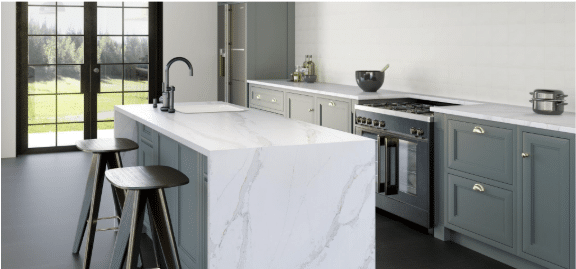
countertop cost factors
A Simpler Option: Accent Countertops Signature Series
Because slab pricing can sometimes feel unpredictable, Accent Countertops created the Signature Series to simplify the process. This includes options for quartz and granite.
Instead of pricing by the full slab, the Signature Series is priced by the square foot, which gives homeowners:
- Clear, predictable pricing
- Simpler budgeting for projects
- A curated selection of high-performing surfaces
- Less confusion during the selection process
Most square foot pricing programs, including the Accent Countertops Signature Series, are limited to a curated selection of colors and materials.
This allows for:
- Simpler pricing
- Better material efficiency
- More predictable budgeting
More exclusive or specialty materials are often only available through slab pricing.
This program is especially helpful for homeowners who want a straightforward pricing structure without sacrificing style or quality.
A Great Option for Smaller Projects
For smaller projects, another option many homeowners overlook are remnants.
Remnants are leftover pieces from larger slabs that are perfect for projects such as:
- Bathroom vanities
- Laundry rooms
- Fireplace surrounds
- Small kitchen sections
- Bars or beverage stations
Because the material has already been purchased as part of a larger slab, remnants are often available at a reduced price, making them a great option for budget-friendly upgrades.
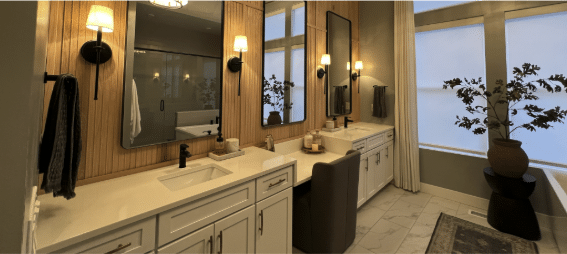
countertop remnants
Final Thoughts
Countertop pricing can seem complicated at first, but once you understand how slabs are used and priced, the process becomes much clearer.
Whether you’re selecting a full slab, exploring the Signature Series for straightforward square foot pricing, or taking advantage of remnant pieces for smaller projects, there are options to fit a variety of budgets and layouts.
At Accent Countertops, our goal is to help homeowners navigate these choices confidently and find the best solution for their space.