


When selecting new countertops, you may hear terms like 2cm and 3cm thickness, but what do they actually mean, and which one is right for your project?
At Accent Countertops, we help homeowners navigate this decision every day. While both options are durable and beautiful, they each come with different advantages depending on your design, layout, and preferences.
Let’s break it down.
What Does 2cm and 3cm Mean?
In the countertop industry, thickness is measured in centimeters, not inches.
- 2cm = ~¾ inch thick
- 3cm = ~1¼ inch thick
While the difference may seem small, it can have a noticeable impact on both the look and functionality of your countertops.
The Look: Standard vs. Built-Up Edges
One of the biggest visual differences comes down to the edge profile.
3cm Countertops
- Naturally thicker.
- No need for additional buildup.
- Creates a bold, substantial look.
2cm Countertops
- Thinner by default.
- Often paired with a mitered edge to create the appearance of a thicker slab.
- Can achieve the same “thick” look with a more customized edge design.
With a mitered edge, most homeowners can’t visually tell the difference, but the fabrication process is different.
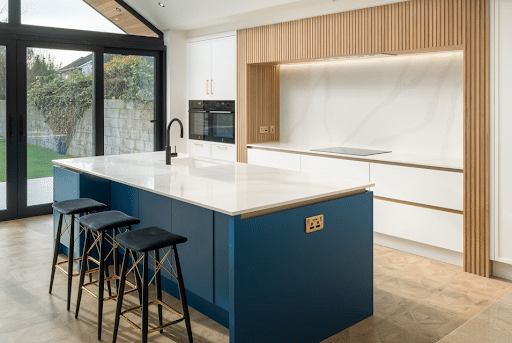
countertop thickness
Backsplash Considerations
Thickness can also impact how your backsplash fits. If you’re replacing countertops but leaving your existing tile backsplash, thickness matters.
- Switching between 2cm and 3cm can create a gap or mismatch.
- 3cm typically sits higher, which may not align with existing tile.
This is something to plan carefully before installation.
Full Height Splash
If you’re doing a full-height slab backsplash, 2cm can actually offer an advantage.
- Thinner material leaves more room behind the sink.
- Allows better spacing for faucets and accessories.
- Can make tighter layouts easier to work with.
Functionality: Weight and Installation
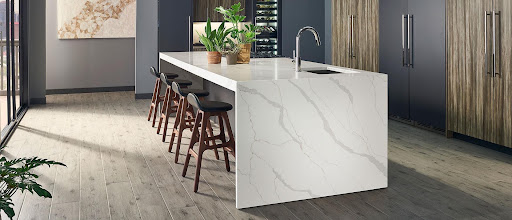
3cm quartz countertops
Thickness also affects weight, which can matter depending on your design.
3cm
- Heavier material.
- Very strong and commonly used.
- Standard for most kitchens.
2cm
- Lighter weight
- Puts less stress on cabinets, especially important for:
- Waterfall edges.
- Large spans or extended overhangs.
What Do Most Homeowners Choose
In many cases, 3cm is the most common choice for kitchens due to its thickness and simplicity.
However, we’re seeing more homeowners choose 2cm for modern designs, especially when incorporating waterfall edges, full-height splash and wanting a more contemporary look.
Our Advice at Accent Countertops
At Accent Countertops, the best choice comes down to your specific project. We always consider:
- Layout
- Backsplash
- Design goals
- Structural needs
Our team will walk you through both options so you can choose what works best for your space, not just what’s standard.