


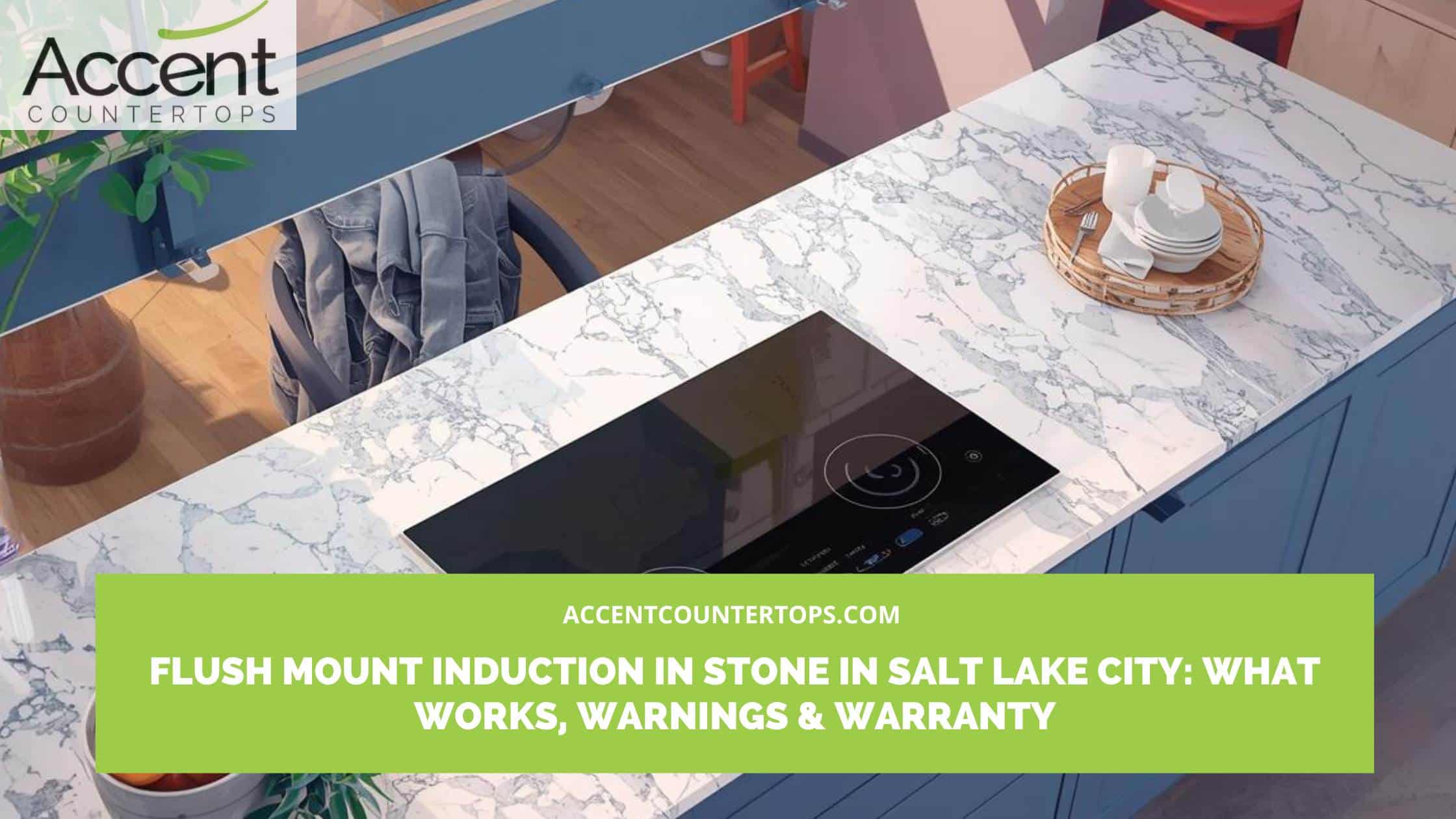
Flush-mount induction cooktops — where the cooktop sits perfectly level with the surrounding countertop rather than dropping into a visible frame — are one of the most requested design details in high-end Salt Lake City kitchens right now. The look is seamless, modern, and genuinely practical for cleanup. But achieving that flush installation in stone comes with real technical considerations that affect both the outcome and your warranty. At Accent Countertops, we regularly handle these installations and want homeowners to understand exactly what is involved before committing.
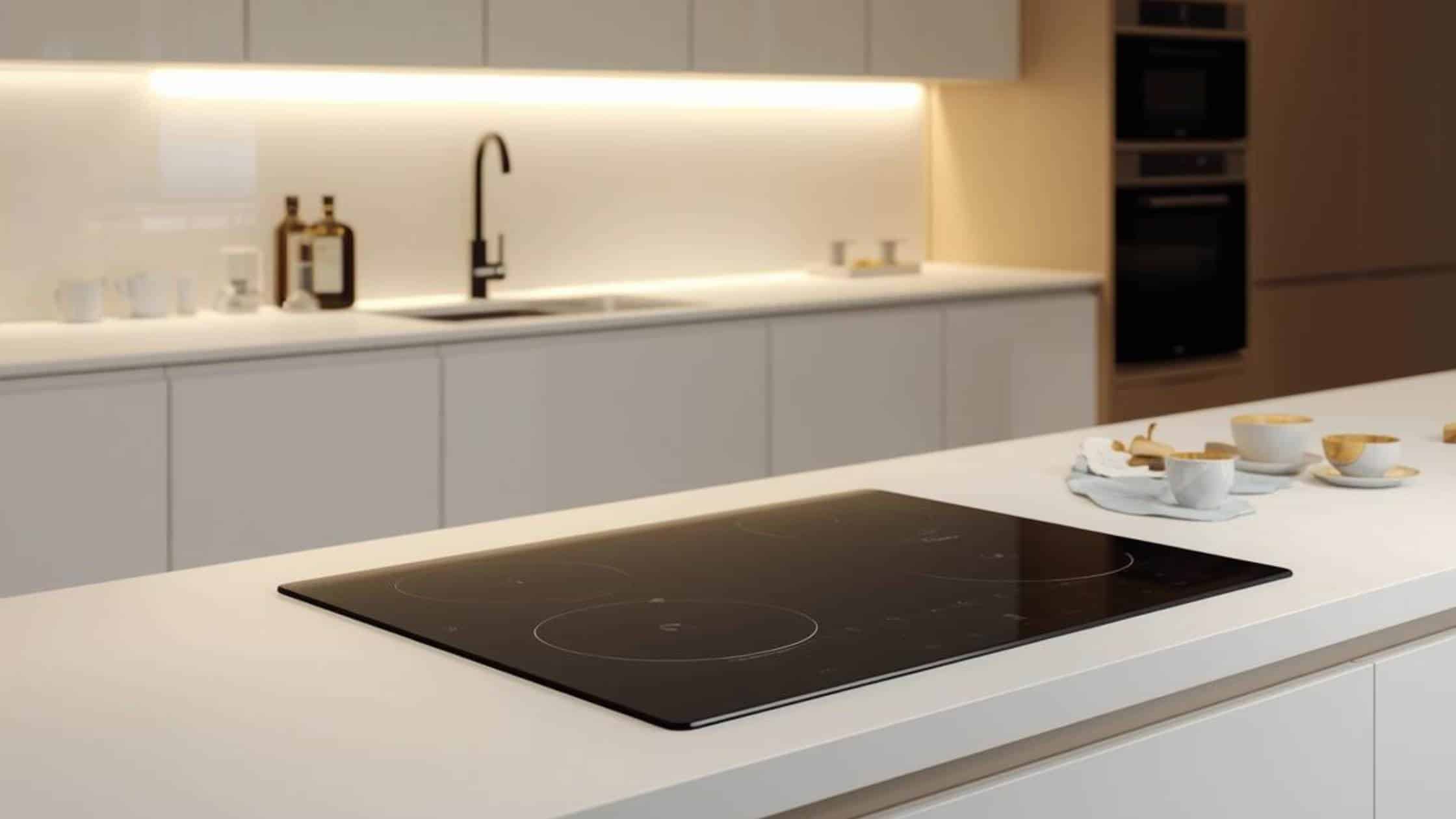
flush mount induction in stone Salt Lake City
What Flush Mount Induction Actually Means
A standard cooktop installation creates a visible seam between the appliance frame and the surrounding countertop surface. A flush-mount installation eliminates that seam by cutting the stone to a precise depth and dimension so the cooktop glass sits level — or nearly level — with the stone surface. The result looks like the cooktop and countertop are a single continuous plane.
Achieving this requires extremely precise fabrication. The cutout must account for the appliance’s exact dimensions, the stone’s thickness, and any expansion clearance specified by the appliance manufacturer. An error of even a few millimeters can result in a cracked stone, an appliance that does not sit correctly, or a warranty-voiding installation.
Which Stone Surfaces Work Best for Flush Mount Induction
Not every countertop material is equally suited to flush-mount induction installations:
- Granite: Excellent. Dense and dimensionally stable. Handles the cutout tolerances and thermal cycling well.
- Engineered quartz: Generally viable with proper clearances, but check manufacturer guidelines — some quartz brands specify minimum heat clearances around induction that affect how flush the installation can be.
- Quartzite: Similar to granite. Performs well in most flush-mount applications.
- Sintered / ultra-compact (Dekton, Neolith): Technically excellent heat tolerance, but these materials are brittle during fabrication — the cutout demands very experienced router work.
- Marble: Not recommended. Heat sensitivity and brittleness make this combination risky.
For the majority of flush-mount induction projects in Salt Lake City, quartz countertops and granite countertops are the most common choices — both for aesthetic and practical reasons.
The Fabrication Details That Make or Break This Installation
Our fabrication team pays close attention to several factors on every flush-mount induction project:
- Cutout tolerance: The stone cutout must match the appliance’s specified rough opening with precision. Too tight and the stone may crack from thermal expansion. Too loose and the appliance rocks or leaves visible gaps.
- Stone thickness: Most cooktop manufacturers have minimum countertop thickness requirements for flush installations. Thinner slabs — under 3 cm — may not be suitable depending on the appliance model.
- Clearance from edges: We always maintain a minimum distance between the cooktop cutout and any sink cutout, seam, or stone edge. Insufficient clearance concentrates stress and increases crack risk.
- Support underneath: The area immediately around the cooktop cutout should be fully supported by cabinetry. Cantilevered spans near an induction cutout are a structural risk.
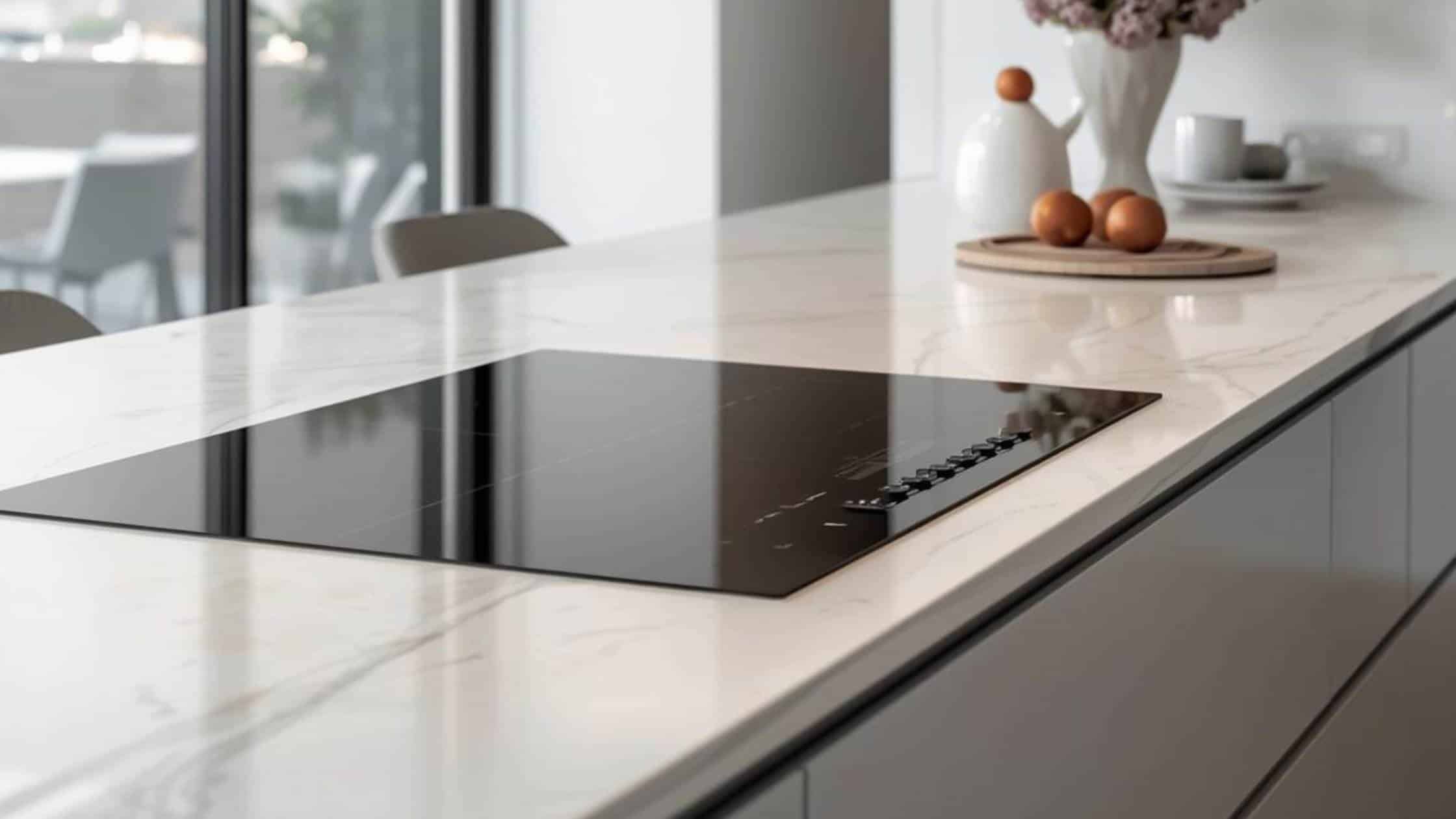
flush mount induction with quartz
Warranty Considerations You Need to Know
This is where many homeowners are caught off guard. Both the cooktop manufacturer and the stone manufacturer may have warranty language that applies to flush-mount installations:
On the appliance side, some induction brands specify minimum clearances between the cooktop and surrounding stone surfaces for adequate ventilation. Installing too flush can void the cooktop warranty if heat buildup causes appliance failure.
On the stone side, most quartz manufacturers will not cover cracks that occur adjacent to cooktop cutouts if the installation does not meet their published guidelines. Always request the manufacturer’s installation specifications before we begin the cutout.
Our team will help you review both sets of requirements before the project begins — this is a step we do not skip.
Frequently Asked Questions
Can you do a fully flush mount with quartz — same plane, no gap?
It depends on the appliance. Some induction manufacturers allow a fully flush surface installation. Others require a small expansion gap or slight recess to ensure proper ventilation and thermal clearance. We will review the specs for your specific cooktop model before cutting.
Does flush mount induction cost more than standard installation?
Yes, typically. The fabrication is more precise and time-consuming than a standard drop-in cutout. The additional cost covers the tighter tolerances and the extra care required to avoid stress cracks in the stone.
My cooktop manual says “drop-in only” — can it still be flush mounted?
Not safely. If the manufacturer specifies drop-in installation, a flush mount may void both the appliance warranty and your stone warranty. We always recommend working within the appliance manufacturer’s published specifications.
Discuss Your Salt Lake City Flush Mount Project with Our Team
A flush-mount induction installation done right looks stunning and performs reliably for years. Done wrong, it can be an expensive repair. Our Accent Countertops fabrication team in Salt Lake City has the experience to do this correctly. Visit our Salt Lake City showroom or find us on Google Maps to bring your appliance specs and we will walk through the project together.