



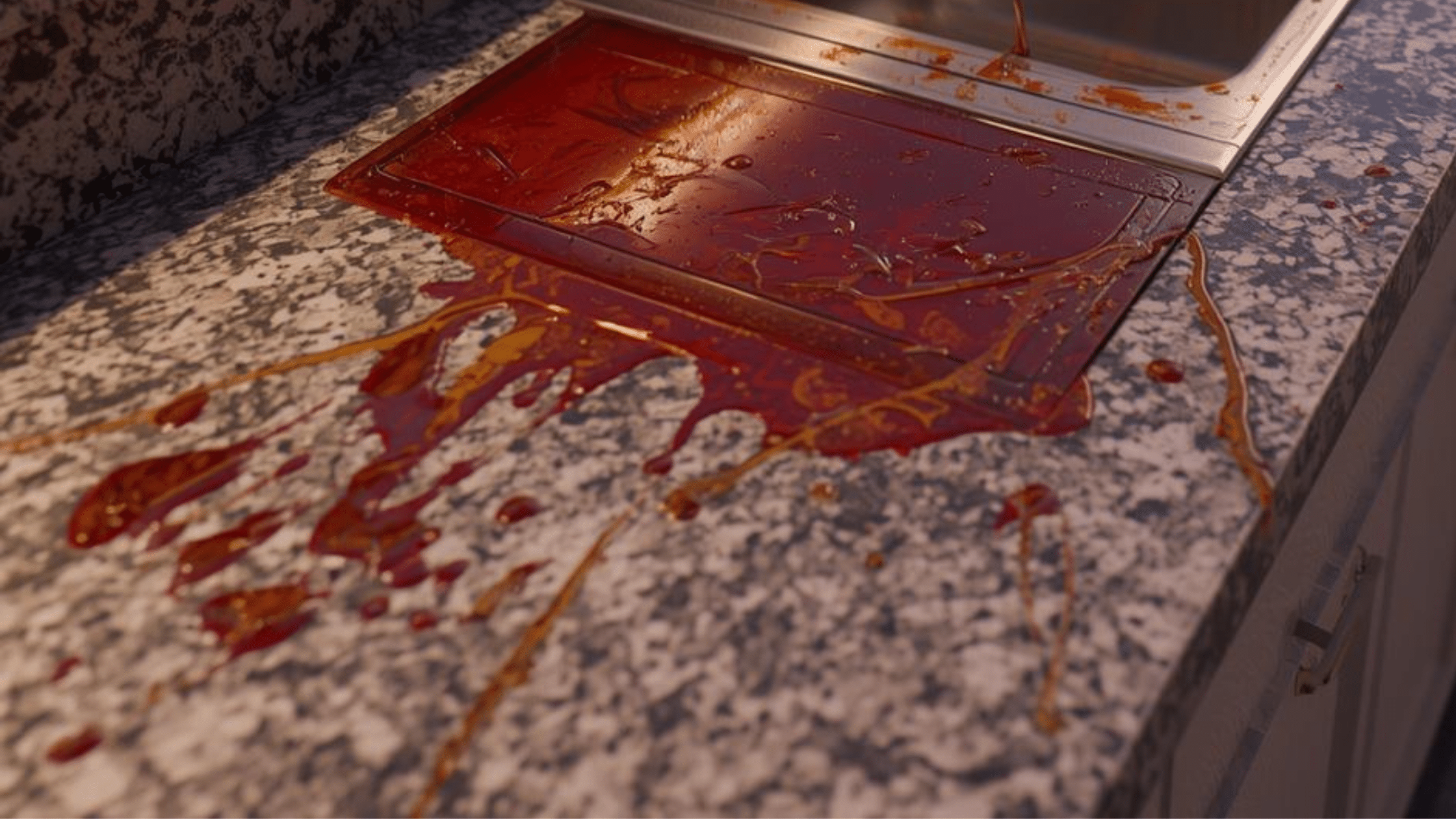
BBQ season is one of the best parts of living in Salt Lake City — and one of the messiest for kitchen and outdoor countertops. Grease is a particularly stubborn stain on stone surfaces because it is oil-based and can penetrate unsealed or thinly-sealed pores quickly. The good news: both granite and quartz countertops respond well to grease removal when you use the right approach. This guide from Accent Countertops covers exactly what to do — and what to avoid — when dealing with grease on either surface.
grease stain removal granite quartz Salt Lake City
Why Grease Behaves Differently Than Other Stains
Water-based spills like wine or coffee sit on the surface or soak in gradually. Cooking grease — especially the hot, aerosolized grease from a grill or high-heat cooking — can penetrate stone immediately. When grease cools and solidifies in the pores of granite, it bonds with the mineral structure. On quartz, the non-porous resin surface means grease cannot penetrate, but it does bond to the surface and becomes increasingly difficult to remove the longer it sits.
The rule across both materials: act on grease as quickly as possible. A fresh grease spill takes seconds to address. A grease stain that has been baked into granite by repeated heat exposure can take multiple treatments.
Removing Grease from Granite
Granite is porous, and grease removal on granite depends on how long the stain has been there and how well the sealer is holding up.
- For fresh grease: blot — do not wipe — with a clean paper towel to absorb as much as possible. Then apply a small amount of dish soap (pH-neutral, no citrus) directly to the stain and let it sit for a few minutes. Gently work it in with a soft cloth in a circular motion, then rinse thoroughly with warm water. Dry the surface completely.
- For set grease stains: a poultice is the most effective approach. Mix baking soda with a small amount of dish soap and water to form a thick paste. Apply it directly to the stain, cover with plastic wrap, and let it sit for 12 to 24 hours. The poultice draws the oil out of the pores as it dries. Remove, rinse, and repeat if needed.
After treating a grease stain on granite, inspect the sealer in that area. Heavy-duty cleaning can strip or thin the sealer. If water no longer beads on the surface in that spot, it is time to reseal.
Removing Grease from Quartz
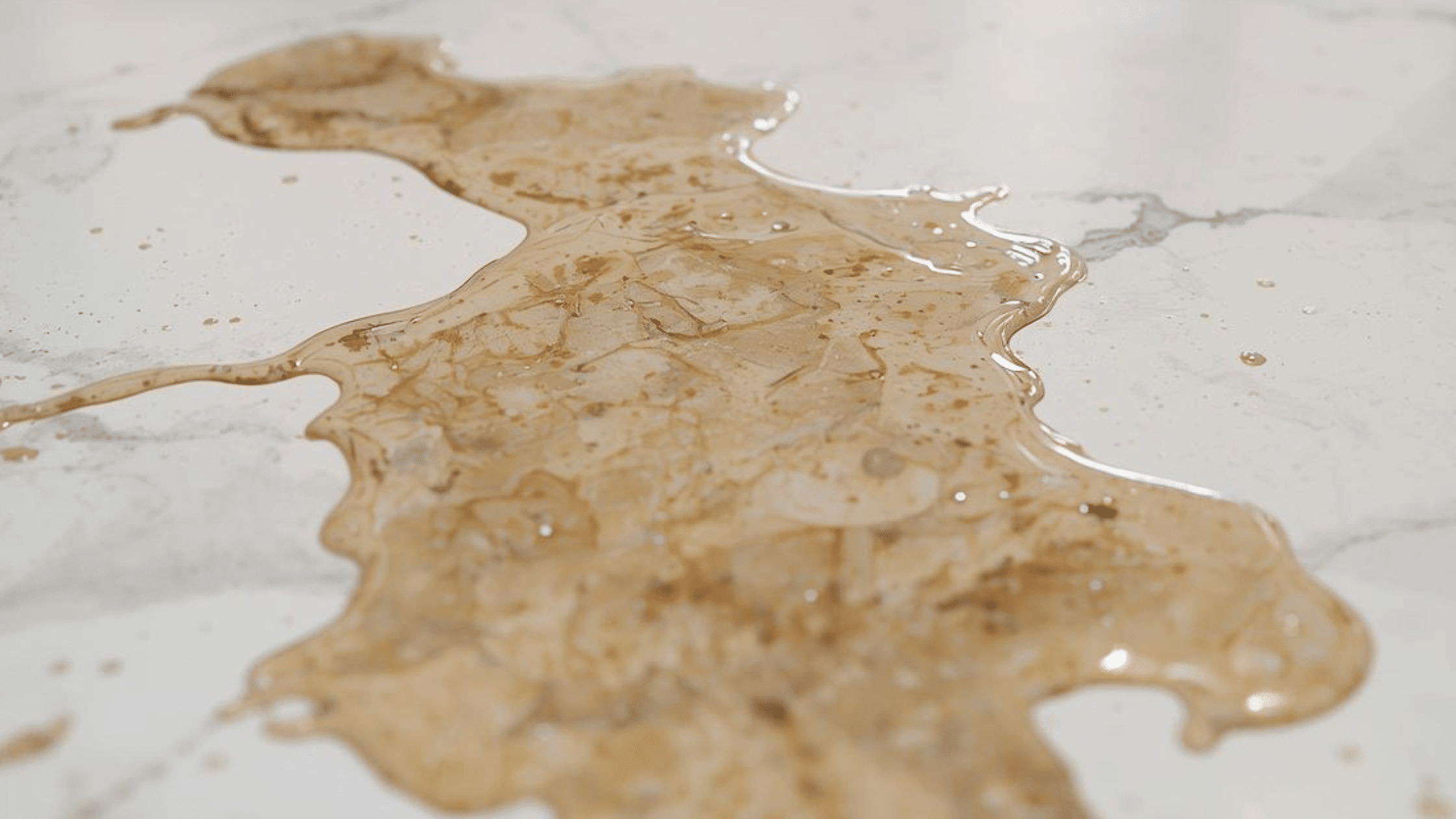
Quartz is non-porous, which means grease cannot soak in — but it can build up on the surface and bond to residues over time, especially near cooktops and on outdoor surfaces.
- For fresh grease: a small amount of dish soap on a damp microfiber cloth, worked in gentle circles, is usually all that is needed. Rinse well with warm water and dry.
- For baked-on or built-up grease: a plastic scraper can gently lift hardened deposits without scratching. Follow with dish soap and a non-abrasive cloth. For stubborn residue, a small amount of isopropyl alcohol on a cloth works well — apply, let sit for 30 seconds, then wipe and rinse.
Never use abrasive pads, steel wool, or scrubbing powders on quartz. The surface can be dulled or micro-scratched, and those scratches become harder to clean over time.
What NOT to Use on Granite or Quartz
- Bleach or bleach-based cleaners: strip sealers on granite and can degrade the resin bonds in quartz
- Citrus-based degreasers: the acid attacks the sealer on granite and can dull quartz resin over time
- Vinegar or other acidic solutions: same problem — acidic cleaners are harmful to both surfaces
- Abrasive scouring pads or powders: will scratch quartz and can damage polished granite surfaces
- Oven cleaner: far too caustic for countertop stone
Preventing Grease Buildup Before It Starts
Prevention is easier than cleanup. A few habits make a real difference:
- Wipe down the countertop near the cooktop after every cooking session, while the surface is still slightly warm
- Use a splatter guard when frying or grilling at high heat
- For outdoor granite, reseal the surface before BBQ season each year in Salt Lake City — a fresh sealer makes grease removal significantly easier
- Keep a pH-neutral stone cleaner within reach for immediate response to spills
how to remove grease from quartz
Frequently Asked Questions
Will BBQ grease permanently stain granite?
Not if you address it promptly and maintain your sealer. Grease that is left to penetrate deeply into unsealed granite can create a darkening stain that requires repeated poultice treatment or professional resurfacing. A well-sealed granite surface gives you a meaningful window to clean up before permanent damage occurs.
Can I use a degreaser spray on quartz countertops?
It depends on the formulation. Most commercial kitchen degreasers contain citrus acids, bleach, or highly alkaline compounds that are not quartz-safe. Look for a degreaser specifically labeled safe for stone or quartz, or use the dish soap and warm water method — it handles most grease effectively without any risk.
How do I know if my granite sealer is still working?
The water drop test is reliable: put a small amount of water on the surface and watch it. If it beads up and holds its shape for several minutes, the sealer is intact. If it absorbs or flattens quickly, the sealer is thinning and it is time to reapply.
Stone Care Questions? Accent Countertops Can Help
Whether you are dealing with a stubborn grease stain or planning a new kitchen countertop project in Salt Lake City, our team is here to help. Visit the Accent Countertops showroom, find us on Google Maps, or browse our quartz countertop options online.