


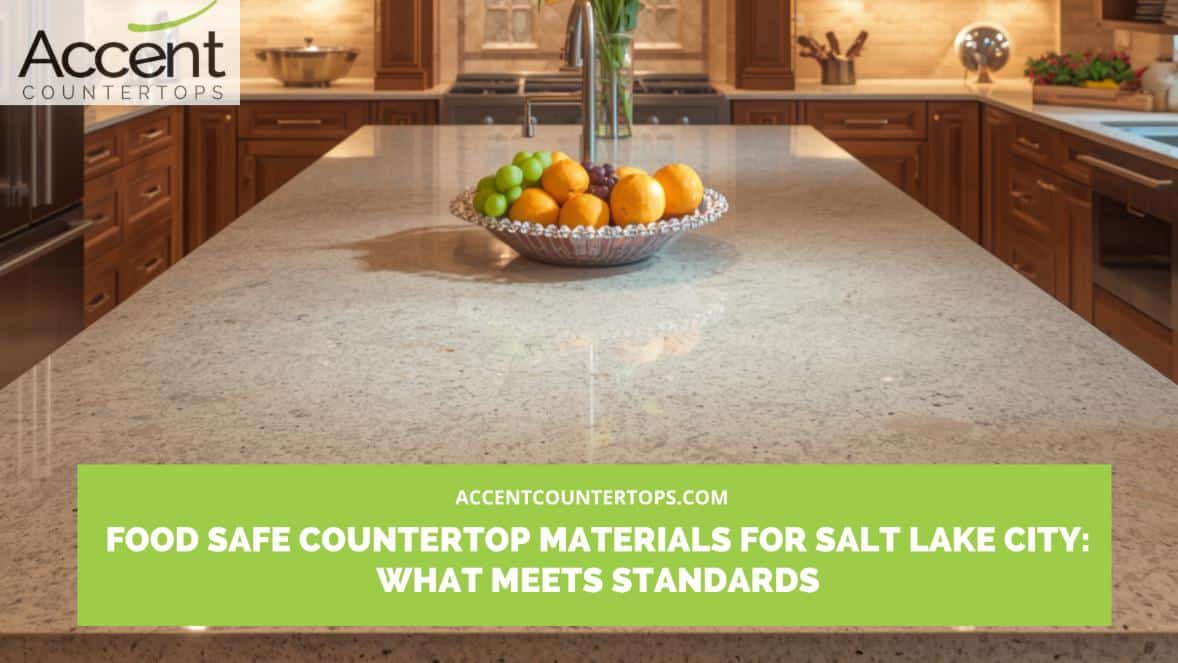
The kitchen countertop is where food is prepared, and for many homeowners in Salt Lake City, that raises a straightforward but important question: which countertop materials are actually safe for food contact? The answer depends on how “food safe” is defined — a term that gets used loosely in marketing and in conversation. This guide from Accent Countertops breaks down what food safety means in practice, which materials meet that standard, and what you should know about each option before you decide.
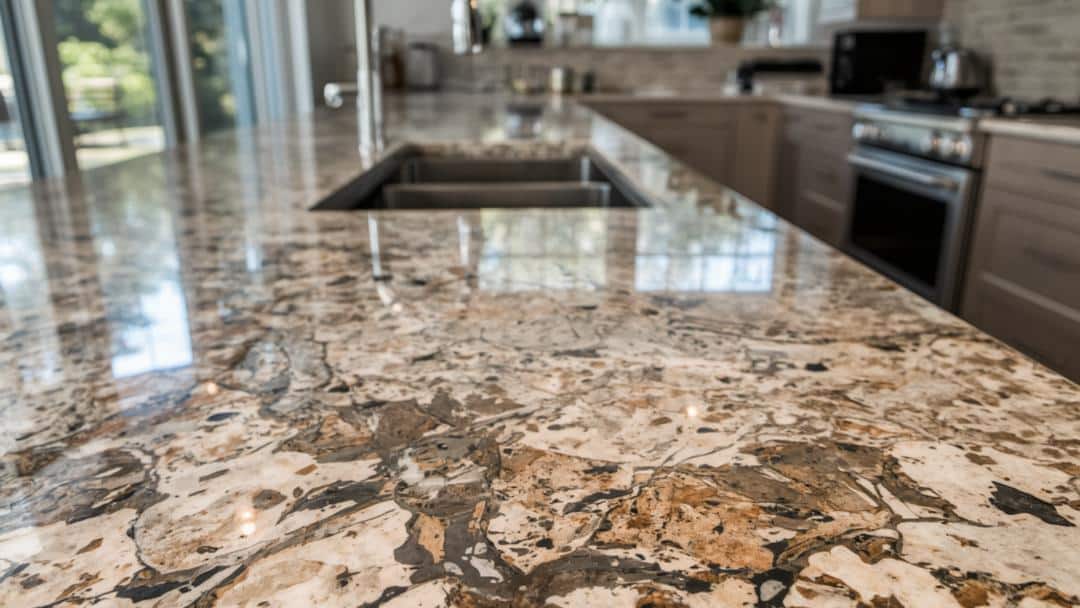
food safe countertop materials Salt Lake City
What Does “Food Safe” Actually Mean?
In the countertop context, food safe generally means two things:
- Non-toxic: the material does not leach harmful chemicals, heavy metals, or compounds into food on contact
- Non-porous or easily sanitized: the surface does not harbor bacteria in pores, crevices, or micro-scratches where pathogens can survive cleaning
No countertop material — not even the best quartz or the most tightly sealed granite — is a substitute for proper cutting boards and food handling practices. Direct meat prep, raw fish, or raw poultry should always happen on a cutting board, not directly on any countertop surface. That said, some countertop materials are significantly more hygienic under normal kitchen use than others.
Quartz: Consistently the Most Hygienic Choice
Engineered quartz countertops are the most reliably food-safe option for most kitchens in Salt Lake City. Because quartz is manufactured with polymer resins that fill all porosity, it is effectively non-porous at a practical level — there are no open channels for bacteria to colonize below the surface. Wiping quartz with soap and water after food prep removes pathogens effectively.
In 2026, quartz remains the recommendation of most food safety-conscious designers and fabricators for this reason. It does not require sealing, does not react to most common food acids, and is easy to keep clean with basic maintenance.
One nuance: deep scratches in any surface — including quartz — can harbor bacteria. Using cutting boards consistently prevents the micro-scratching that can compromise surface hygiene over time.
Granite: Food Safe With Proper Sealing
Granite countertops are a natural stone with inherent porosity. When properly and regularly sealed, granite is considered food safe for general kitchen use — the sealer fills the surface pores and prevents bacterial infiltration. The challenge is maintenance: a granite countertop that has not been resealed on schedule can develop pores that are difficult to fully sanitize.
In a Salt Lake City home where the granite is well-maintained and sealed annually, it is a perfectly reasonable food-safe surface for everyday food preparation. Just keep up with the sealing schedule, use cutting boards for raw meat, and clean with a pH-neutral cleaner rather than bleach or vinegar, which can degrade the sealer over time.
Solid Surface: Seamless and Repairable
Solid surface countertops — materials like Corian — have a different kind of food safety advantage: they can be installed without seams, which eliminates a key zone where bacteria accumulate. They are also non-porous in composition, making them easy to sanitize.
The tradeoff is surface durability — solid surface is more susceptible to scratching than stone, and scratches on a solid surface are the places bacteria hide. The advantage is that solid surface can be sanded and renewed, restoring a fresh food-safe surface. This renewability is one reason solid surface is common in commercial food service applications.
Materials Worth a Second Look From a Food Safety Perspective
- Unsealed granite: porous and problematic for food contact without consistent sealing
- Marble: porous, acid-sensitive, and difficult to keep in a consistently food-safe condition near acidic foods like tomatoes, citrus, or vinegar
- Wood or butcher block: porous and more difficult to fully sanitize, though food-grade mineral oil treatments help significantly
- Tile with grout lines: the grout is porous, stains easily, and is a bacterial harbor in kitchen applications
What About Certifications?
NSF International certifies materials that meet food safety standards for commercial food service. Most residential countertop materials — quartz, granite, and solid surface — have not been NSF certified because the certification is designed for commercial contexts. For residential kitchens in Salt Lake City, the practical question is porosity and ease of cleaning rather than formal certification.
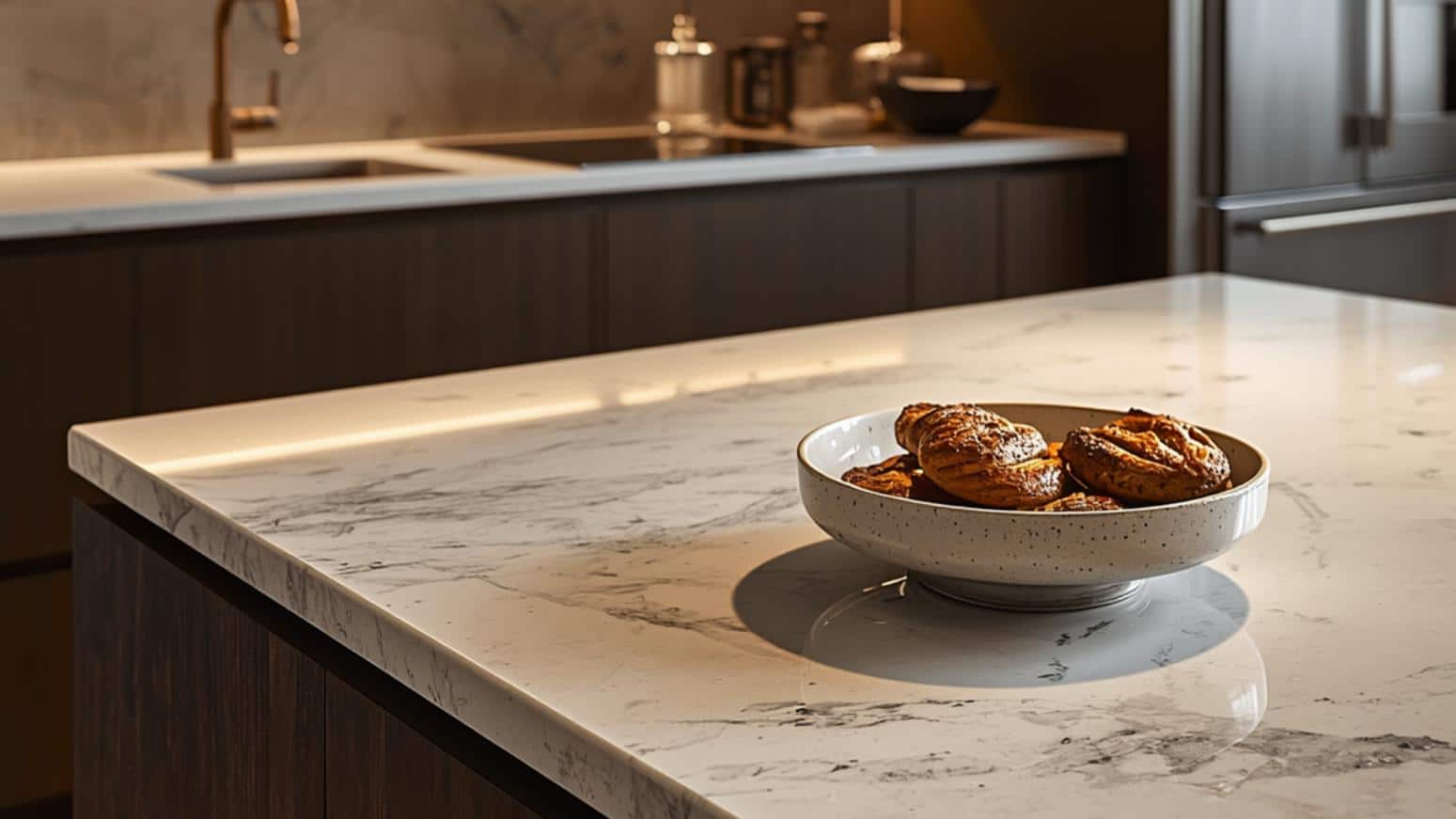
is quartz food safe 2026
Frequently Asked Questions
Is quartz food safe in 2026?
Yes. Engineered quartz’s non-porous composition makes it one of the most reliably hygienic countertop surfaces available. It does not require sealing, does not react to most food acids, and cleans effectively with soap and water. Using cutting boards for raw protein prep is still recommended, as with any surface.
Can bacteria grow in granite countertops?
Research on this topic is somewhat mixed, but the general consensus is that well-sealed granite does not present a meaningful bacterial risk under normal kitchen use. The concern applies primarily to granite that has not been sealed properly or has had its sealer depleted — in those cases, surface porosity can allow bacterial colonization in the pores. Regular sealing is the mitigation.
What is the most food-safe countertop for families with young children?
Engineered quartz is the most straightforward recommendation for families prioritizing food safety in Salt Lake City. Its non-porous surface, low-maintenance requirements, and durability under heavy use make it the most practical food-safe choice for busy household kitchens.
Choosing a Food-Safe Countertop in Salt Lake City?
Our team at Accent Countertops can help you weigh the practical food safety and performance differences between quartz, granite, and solid surface options. Visit our Salt Lake City showroom or find us on Google Maps to explore materials in person.