



A chipped quartz countertop is more common than most homeowners expect — and more repairable than many realize. Whether the damage came from a dropped cast iron pan, a heavy dish, or an impact near the edge of the countertop, a chip in quartz is usually not a reason to replace the entire slab. This guide from Accent Countertops explains what causes chips in quartz, what your repair options look like, and when the damage is significant enough to require professional attention in Salt Lake City.
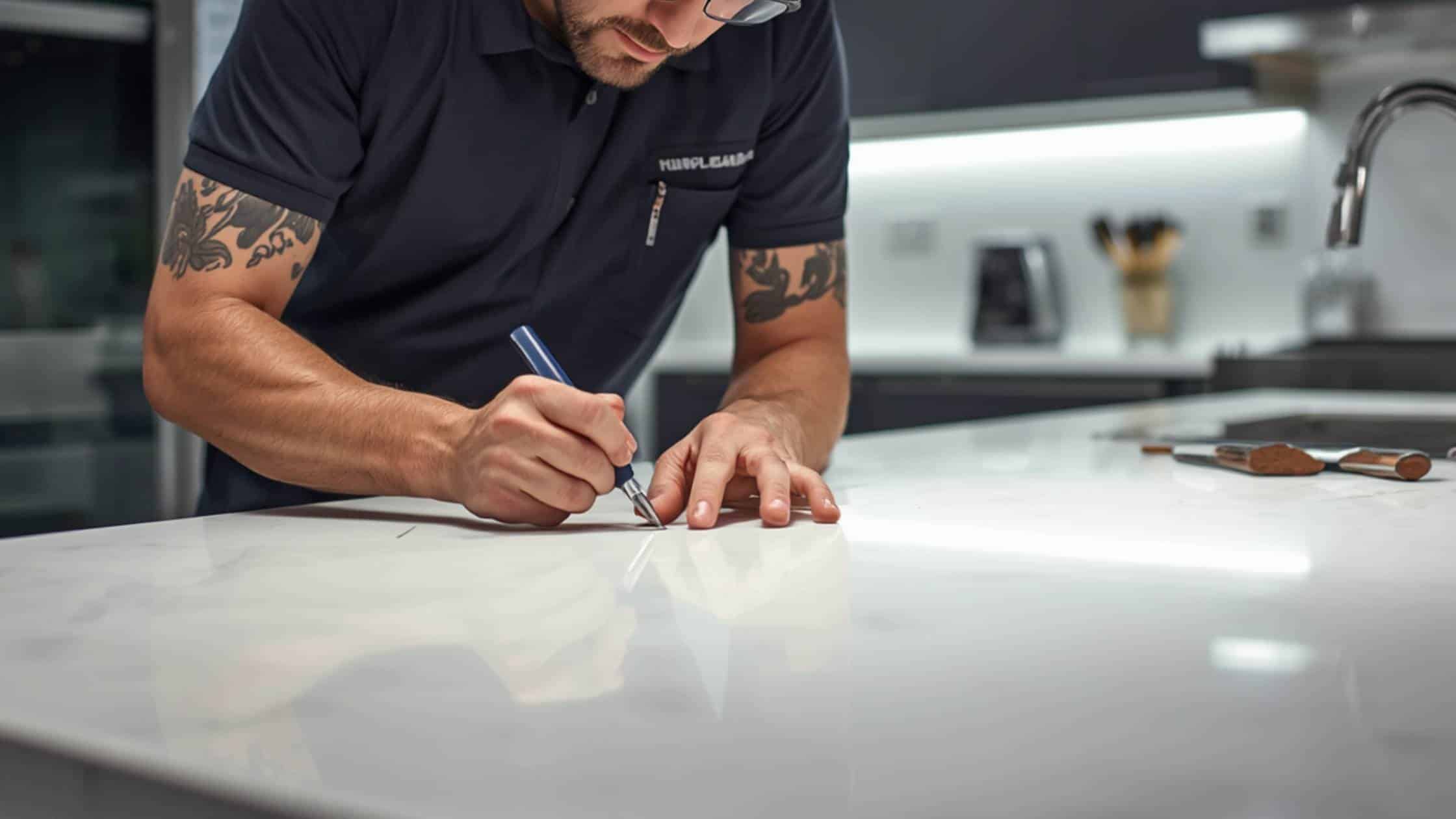
repair chip in quartz countertop Salt Lake City
How Quartz Gets Chipped
Engineered quartz is highly durable under everyday use — it resists scratching, does not react to most cleaning products, and handles normal kitchen loads without issue. But it does have one vulnerability: impact. A concentrated point of force — a dropped pot, a hard edge strike, or an object falling directly onto an edge or corner — can chip or fracture the material.
The most common locations for chips in quartz are:
- Edge profiles: corners and the underside lip of countertop edges are the most vulnerable points
- Near sink cutouts: the stone is structurally thinner in this area and more susceptible to impact damage
- Near stovetop cutouts: same reason — the stone around cutouts has less mass to distribute impact energy
- Areas with unsupported overhangs: long overhangs without adequate support allow flexing, which can cause fractures
Temperature shock can also cause small surface fractures in quartz — placing a frozen item directly on a very warm surface, or vice versa. This is less common but worth knowing.
Can You DIY a Quartz Chip Repair?
Minor chips — small dings under 1/4 inch on a non-prominent edge — can sometimes be addressed with a DIY quartz repair kit. These kits use an epoxy or acrylic compound that you tint to match the stone color, fill the chip, and then cure and buff to a finish.
The honest assessment: DIY repairs on quartz rarely achieve an invisible result. Matching the color accurately is difficult, and matching the translucency and texture of the surface is harder still. On a very light or uniform quartz color, the repair may be barely noticeable. On a complex veined or textured quartz, a DIY patch often looks obvious.
If the chip is in a visible or high-traffic area, or if cosmetic perfection matters, a professional repair is worth the investment.
What Professional Quartz Chip Repair Involves
A professional quartz repair uses color-matched epoxy compounds and skilled technique to achieve results that are close to invisible on most surfaces. Here is what the process typically looks like:
- Assessment: the technician evaluates the size, depth, and location of the chip, and whether the surrounding area has any micro-cracks that need addressing
- Surface preparation: the chip area is cleaned, dried, and sometimes slightly opened to ensure the filler adheres properly
- Color matching: tinted epoxy or acrylic is mixed to match the stone. This is the most skill-dependent step — getting the color, depth, and texture right takes experience
- Fill and cure: the compound is applied in layers, allowed to cure, and then sanded flush with the surrounding surface
- Polishing: the repaired area is polished to blend with the surrounding finish level
Results vary depending on the quartz color and pattern. Solid or near-solid colors typically repair more invisibly than complex veined patterns. We will give you an honest assessment of expected results before proceeding.
When Repair Is Not the Right Answer
Some damage is beyond cosmetic repair:
- Large fractures that run through the slab: structural integrity is compromised and full slab replacement is needed
- Multiple adjacent chips or cracking near a cutout: this can indicate an underlying support or installation issue that needs to be corrected first
- Chips accompanied by staining or darkening of the stone: may indicate moisture has entered and the quartz needs to be evaluated for deeper damage
If you are uncertain whether a chip is repairable or indicative of a larger problem, bring it to us for an assessment. Catching structural issues early prevents a small chip from becoming a full slab failure.
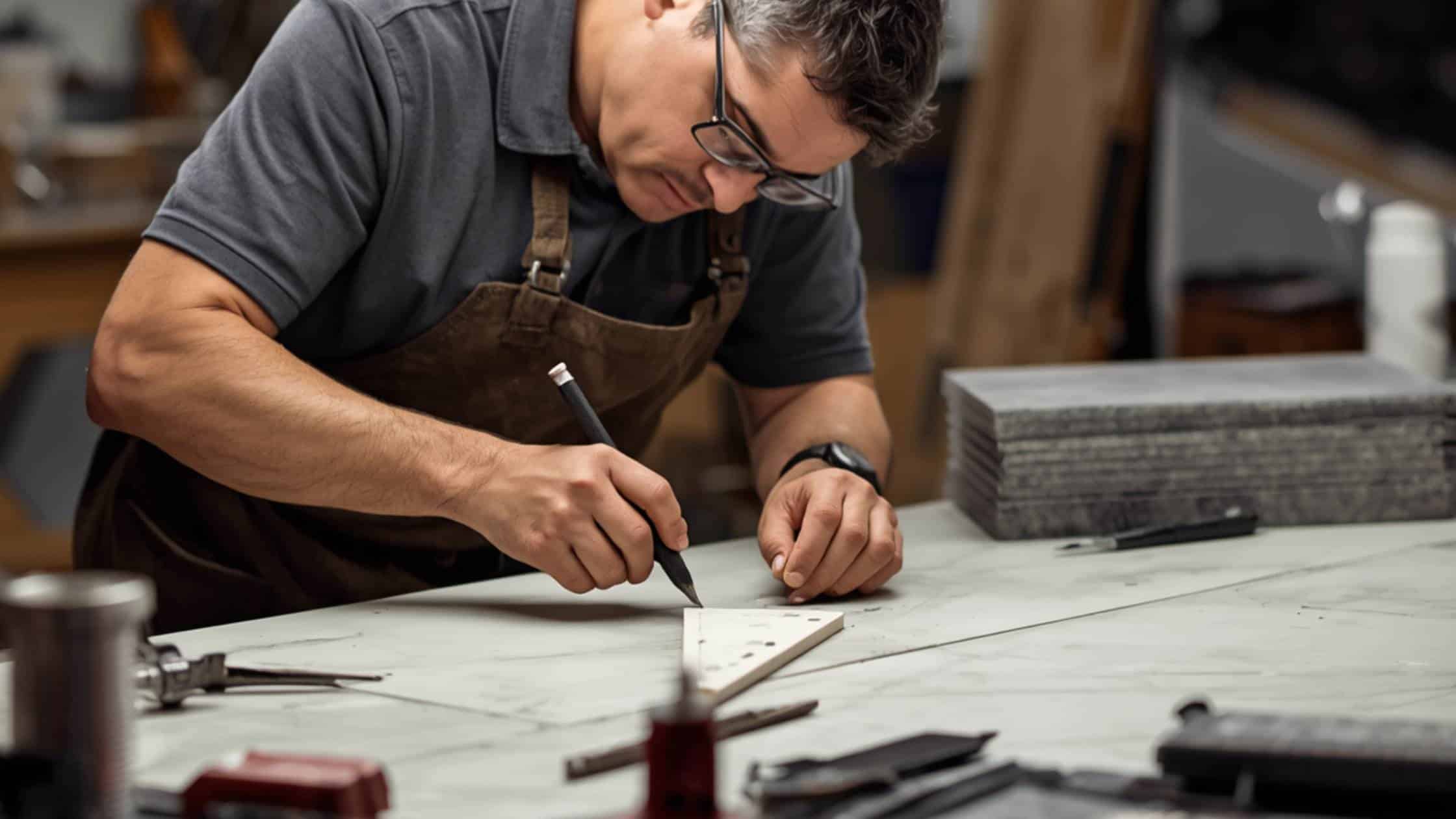
can a chip in quartz be fixed
Frequently Asked Questions
Is a chipped quartz countertop covered under warranty?
Most quartz manufacturer warranties cover manufacturing defects, not physical damage from impact. A chip caused by dropping a heavy object is typically considered accidental damage and is not covered. However, if you notice edge chipping that appears to originate from the fabrication process itself, or cracking near cutouts during normal use, those situations may warrant a warranty conversation. Our team can help you review your warranty terms.
How much does quartz chip repair cost in Salt Lake City?
Minor repairs by a professional typically run $100 to $250 depending on the location, size, and complexity of the chip and the travel time involved. Multiple chips repaired in one visit can be more cost-effective.
Can you repair a chip at the edge of a sink cutout?
Yes, this is one of the most common repair locations. Edge chips near sink cutouts are very repairable in most cases. The area needs to be assessed to confirm there are no deeper cracks before repair is attempted.
Chip in Your Quartz? Contact Accent Countertops in Salt Lake City
Whether you need a quick chip assessment or a full professional repair, our Accent Countertops team in Salt Lake City can help. Stop by our showroom or find us on Google Maps to discuss your countertop situation and get an honest recommendation on the best path forward.