

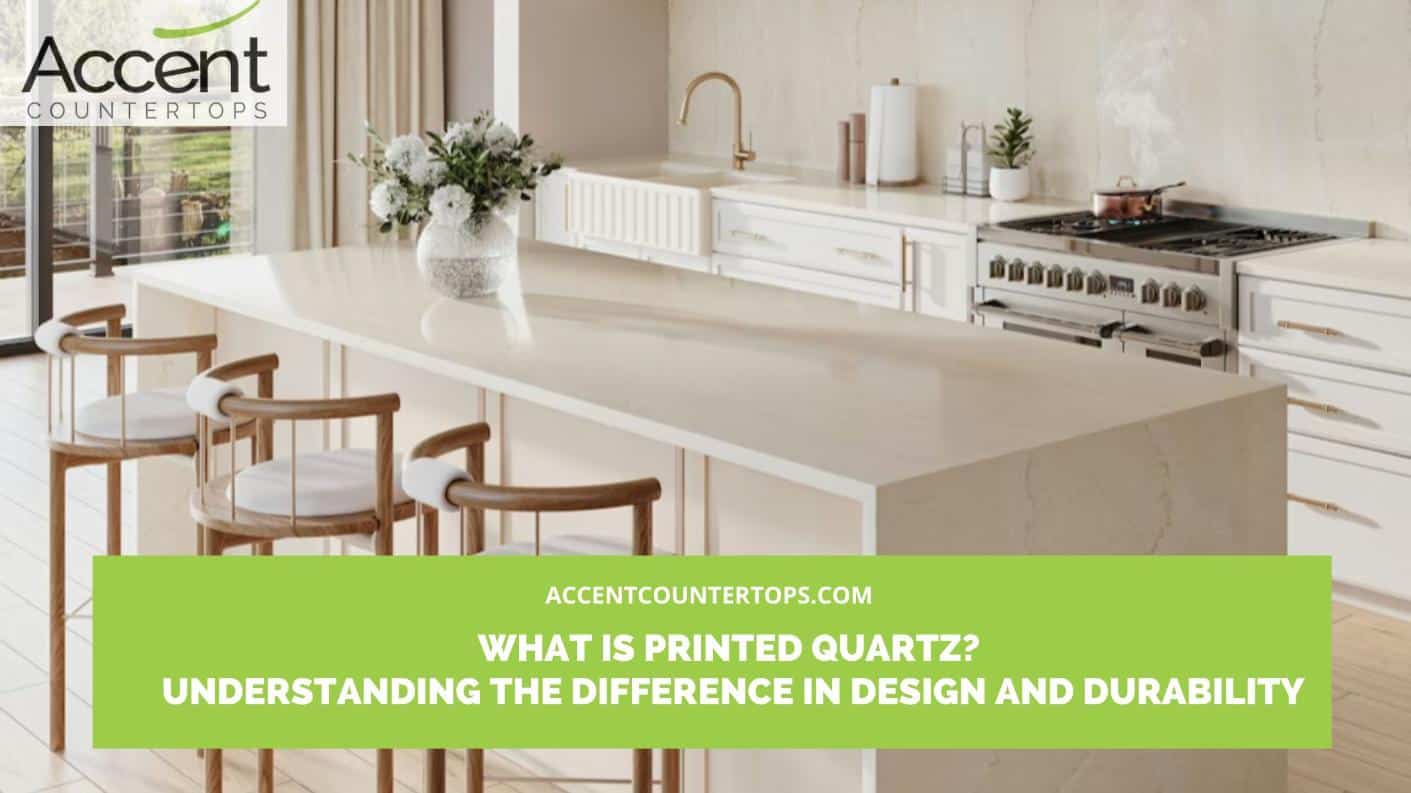
When shopping for countertops, you may come across the term “printed quartz”, especially when looking at designs that mimic marble or other natural stones.
At first glance, many of these surfaces look very similar, but how they’re made can impact appearance, design flexibility, and installation approach.
At Accent Countertops, we want homeowners to understand what they’re choosing. Not just how it looks, but what’s beneath the surface.
What Is Printed Quartz?
Printed quartz is a type of engineered quartz where the design is applied to the surface, rather than being consistent throughout the entire slab.
This allows manufacturers to create:
- Realistic marble veining
- Detailed patterns
- High-end visual designs
The base material is still quartz, meaning:
- It’s durable
- Non-porous
- Low maintenance
So from a performance standpoint, it still functions like quartz.
Not All Quartz Looks the Same
Some quartz designs are made so that the pattern runs through the entire slab. Others, like printed quartz, have a surface level design layer.
Why This Matters:
If the design only exists on the surface:
- Edges may not show the same pattern.
- Cutouts (like sinks) won’t carry the veining through.
- Mitered edges may require more planning to maintain the look.
With full-body designs:
- The pattern continues throughout.
- Edges and cuts appear more natural.
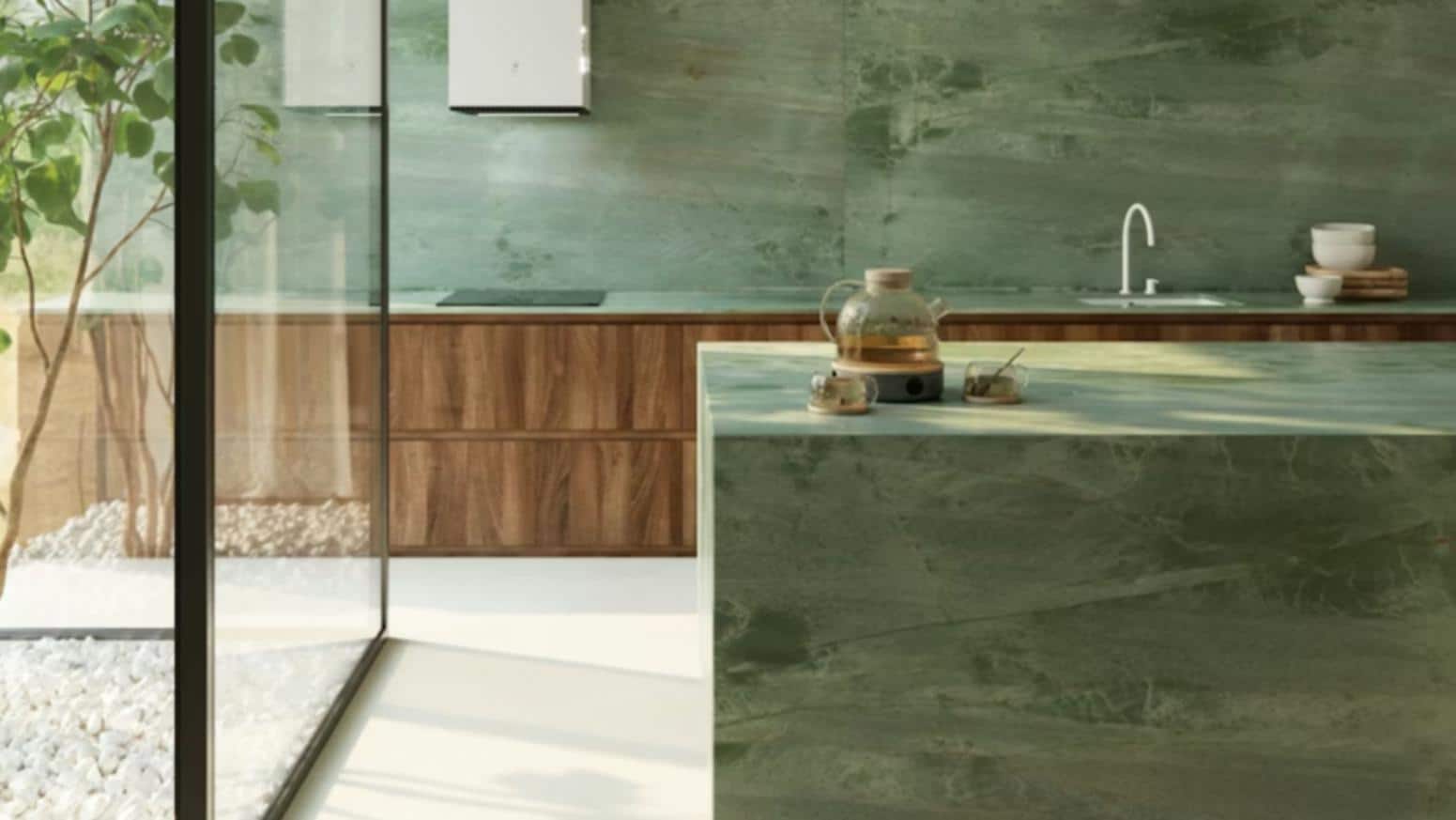
printed quartz vs porcelain
How Does This Compare to Porcelain?
Printed quartz is often compared to porcelain surfaces, since both can achieve highly detailed, realistic designs. Here’s how they differ:
Porcelain
- Thin, lightweight material.
- Extremely dense and hard surface.
- Highly resistant to heat, UV exposure, and staining.
- Ideal for modern, seamless designs.
Porcelain allows for incredibly detailed, high-definition patterns, making it a popular choice for homeowners who want a clean, contemporary look.
Because of its structure, porcelain requires precision during fabrication and installation, which is why it’s important to work with an experienced team.
Quartz
- Thicker material.
- More forgiving during fabrication.
- Widely used for full kitchen appliances.
- Consistent and durable surface.
Both materials perform well; they just offer different advantages depending on your project.
Design vs. Structure: What Should You Choose?
If your priority is appearance, printed quartz can offer:
- Beautiful, high-end designs.
- Consistent, controlled veining.
- A modern, clean look.
If your priority is pattern continuity throughout the slab, you may want to look for:
- Full-body quartz options.
- Designs where the pattern runs throughout.
What to Consider Before Choosing Printed Quartz
Before selecting a surface, it’s important to ask:
- Will edges be visible?
- Are you doing mitered edges?
- Do you want veining to continue through cuts and edges?
These details can affect the final look more than most homeowners expect.
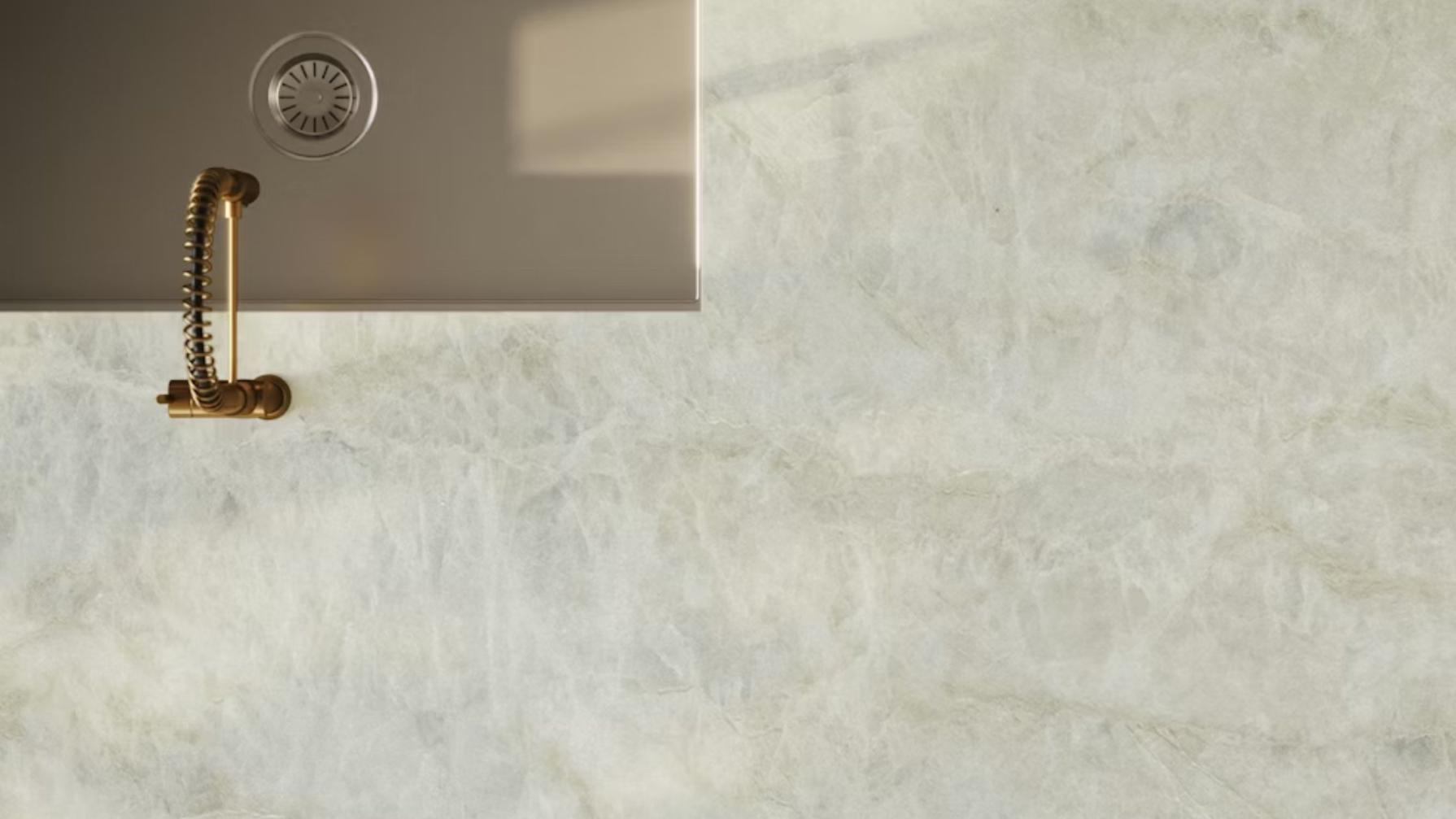
printed quartz vs porcelain
Our Advice at Accent Countertops
At Accent Countertops, we walk homeowners through the differences between printed designs and full-body materials so there are no surprises during fabrication.
We always recommend:
- Viewing full slabs when possible.
- Understanding how the material will look after cuts.
- Asking about edge treatments and layout.
That way, your final countertops look exactly how you expect.
Final Thoughts
Printed quartz offers incredible design flexibility while maintaining the durability and low maintenance quartz is known for.
Porcelain, on the other hand, provides a sleek, modern surface with advanced design capabilities and excellent performance, especially in contemporary spaces.
Understanding how each material is made and how that impacts the final look is key to making the right choice.
If you’re exploring quartz or porcelain options, Accent Countertops is here to help you compare materials and choose the best fit for your space.